Understanding Breathing Changes at the End of Life: What Caregivers Need to Know
You notice it suddenly—your loved one’s breathing sounds different. Maybe it’s irregular, maybe there’s a rattling sound, or maybe they’ve stopped for a moment before gasping for air.
It’s unsettling, and even if someone from hospice mentioned this could happen, nothing truly prepares you for the moment it does. You might wonder if your loved one is in pain, if they’re struggling, or if you should be doing something to help.
These beathing changes are a normal part of the dying process. While they may sound alarming, they are not known to cause discomfort for your loved one. Understanding what’s happening can help ease some of the fear and uncertainty. This guide explains common breathing changes at the end of life and how you can support both your loved one and yourself during this time.
1. Why Is My Loved One’s Breathing Changing?
In the final days or hours of life, the body is slowly shutting down. Breathing becomes irregular because the brain is no longer signaling the body to maintain a steady rhythm. Other factors, such as decreased fluid clearance and weakened muscles, contribute to different breathing patterns.
These changes are not signs of suffering but part of the natural progression toward death. While they may be unsettling to hear, rest assured that your loved one is not in distress.
2. What Do These Breathing Patterns Mean?
During the dying process, caregivers may notice several distinct breathing patterns. While they may sound concerning, they are all common and normal in hospice patients:
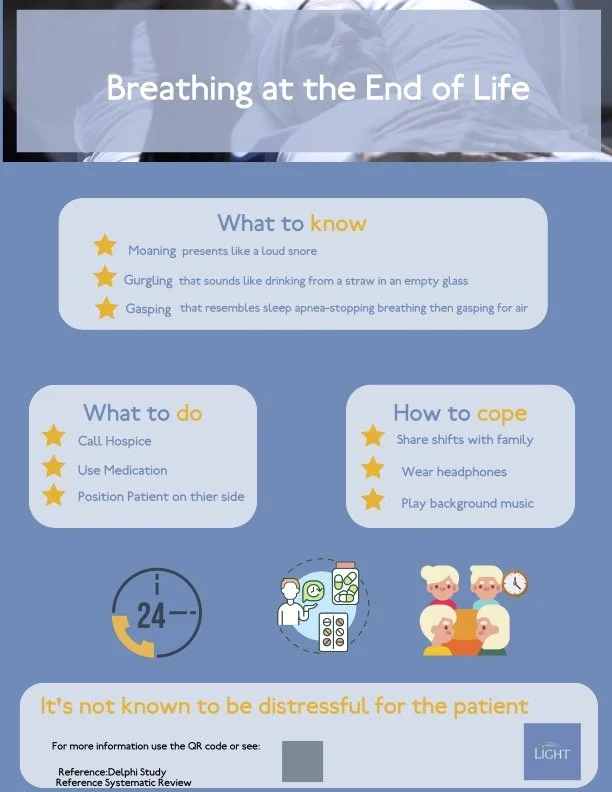
Moaning: This can sound like a loud snore and may be due to air passing over relaxed vocal cords. It does not mean the person is in pain.
Gurgling (Sometimes Called the “Death Rattle”): This sounds like someone drinking through a straw in an empty glass. It happens because saliva or fluids collect in the throat as the swallowing reflex weakens. Though it may sound distressing, your loved one is not choking or suffering.
Gasping (Apnea): Resembling sleep apnea, this is when a person stops breathing for periods and then gasps for air. This is a common and expected breathing pattern as the body naturally slows down.
These changes indicate that the body is preparing for death and are not known to cause discomfort for the patient.
3. How Can I Cope With the Sound of These Breathing Changes?
Hearing these sounds can be difficult, even when you understand they are normal. Caregivers often feel emotionally and physically drained, and it’s okay to step away when needed. Here are some ways to cope:
Share shifts with family or friends. It’s normal to need a break, even if you are the primary caregiver. Allow others to step in so you can rest.
Use headphones or play background music. Calming music can be soothing for both you and your loved one. Consider playing their favorite songs or peaceful instrumental music.
Step outside for fresh air. Sometimes, just a few minutes away can help regulate your emotions and allow you to return feeling more grounded.
Taking care of yourself is just as important as caring for your loved one.
4. What Can I Do to Help My Loved One?
Even though these breathing changes are normal, there are steps you can take to provide comfort and reassurance:
Call your hospice team. They can guide you on what to expect and offer medication or other strategies to ease breathing changes.
Use prescribed PRN medications. Hospice may provide medications to relax breathing muscles and minimize congestion. These should be given as instructed.
Reposition your loved one. Turning them onto their side can help fluid drain and reduce gurgling sounds.
Your presence and calm reassurance can be the most comforting thing for your loved one during this time.
5. When Should I Call Hospice for Help?
Hospice is there to support you, and you should never hesitate to reach out. Call your hospice team if:
You are unsure whether a breathing change is normal.
You need guidance on giving medications.
You feel overwhelmed and need emotional support.
Remember, you are not alone in this. Hospice providers are experienced in managing these symptoms and can offer reassurance, practical support, and comfort.
Final Thoughts
Changes in breathing at the end of life are expected, but they can be unsettling for caregivers. Understanding that these patterns are normal and not distressing for your loved one can help ease your worry. Taking care of yourself—whether by stepping away for a break, using soothing background music, or asking for help—is just as important as being there for your loved one.
If you need additional guidance, don’t hesitate to reach out to your hospice team. They are there to support both you and your loved one during this journey.
For more caregiver resources and expert guidance, visit our [YouTube Channel] for videos on hospice care, end-of-life comfort measures, and emotional support.